
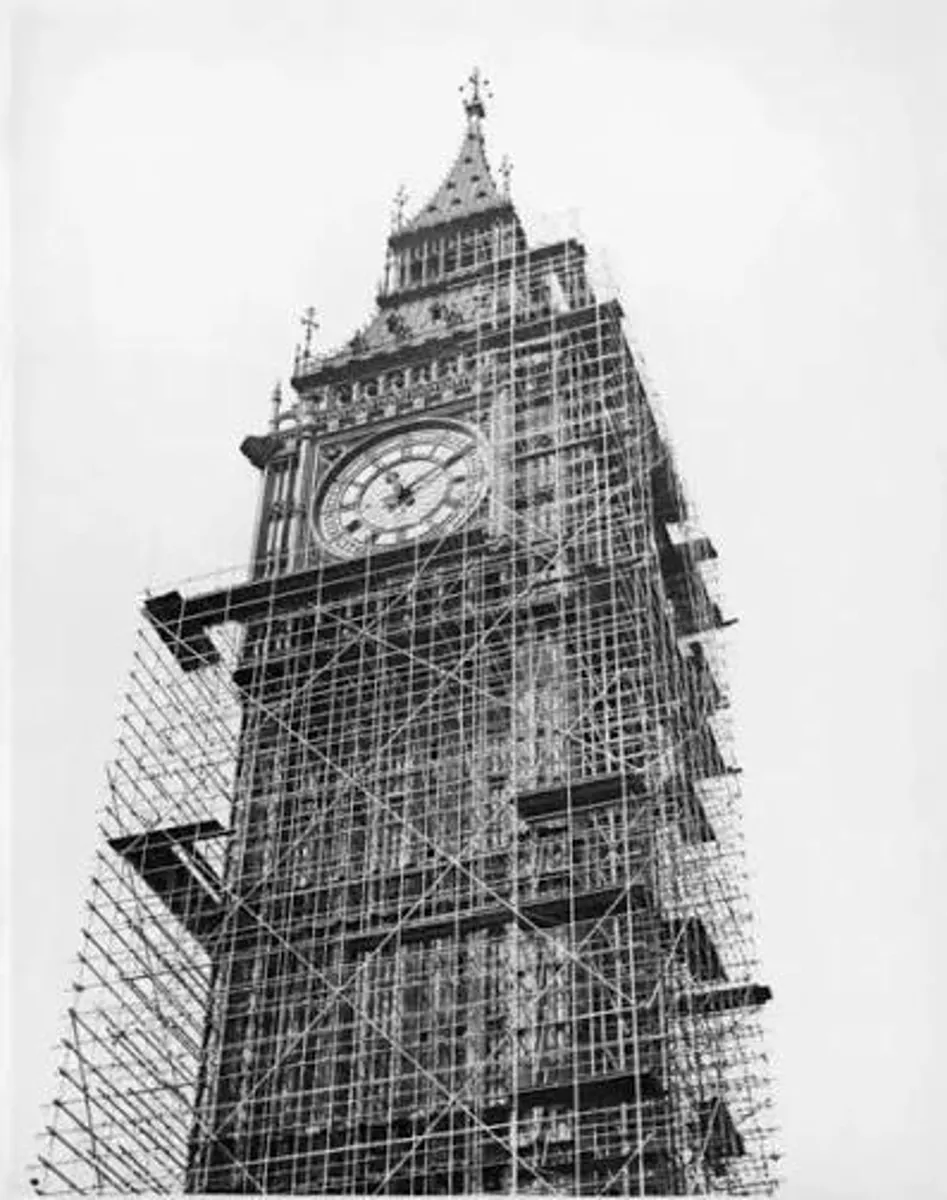
The restoration of London's iconic Elizabeth Tower, commonly known as Big Ben, stands as one of the most ambitious heritage conservation projects in recent history.
Between 2017 and 2022, this UNESCO World Heritage Site underwent its most extensive restoration, requiring a bespoke scaffolding system that was an engineering marvel in its own right .
Why Was Scaffolding Needed at Big Ben?
Decades of exposure to London's pollution, weather, and the lingering effects of WWII bomb damage had taken a significant toll on the 96-metre tower . The restoration project addressed critical issues including:
-
Stonework deterioration: Over 800 areas of damaged stone needed repair or replacement .
-
Clock mechanism problems: The Great Clock required a complete overhaul .
-
Cast iron roof corrosion: The roof needed to be dismantled and repaired .
-
Water damage: Leaks had caused moisture-related issues throughout the structure .
-
Asbestos and lead paint: Hazardous materials were discovered during the work .
The Scaffolding Solution: Engineering Excellence
The scaffolding erected around Big Ben was far more than simple temporary access. It was a carefully engineered solution that took six months to assemble and utilised approximately 23,500 components .
Key Technical Specifications
-
Height: 98-100 metres (reaching near the top of the tower) .
-
Weight: 800 tonnes of equipment were used .
-
Design principle: The scaffold was braced but not attached to the historic fabric of the tower to prevent damage .
-
Working platforms: 47 working lifts provided access to all areas .
Challenges Overcome
Non-Intrusive Design
One of the greatest challenges was creating a scaffold that did not tie into the building itself. PHD Modular Access Services, working with Layher UK, designed a system using compression ties against the stonework to stabilise the structure without causing damage .
Complex Geometry
The tower's intricate decorative elements and the layout of adjacent buildings meant only one face could be scaffolded fully to ground level. Structural steel sections were built up from the ground to span surrounding roof areas and provide a stable base .
Heritage Protection
The scaffold needed to provide gap-free access for workers while protecting delicate stone carvings and allowing the clock faces to pass through platforms without damage. One clock face remained visible throughout the project, powered by an electric motor .
The Restoration Team
-
Main Contractor: Sir Robert McAlpine Special Projects Division secured the scaffolding contract valued at approximately £3.5 million .
-
Scaffolding Supplier: Layher UK provided the Allround® scaffolding system .
-
Installation: PHD Modular Access Services Ltd. (Heritage Division) .
-
Conservation Architects: Purcell led the works through the largest conservation project in the tower's history .
-
Engineering: AECOM provided structural and heritage engineering expertise .
The Results of the Project
Conservation Achievements
-
80% of the original cast iron roof was retained and refurbished .
-
Historic colour scheme restored: The clock's numerals and hands were repainted Prussian blue, matching the original Victorian design .
-
New lift installed in a former ventilation shaft, improving accessibility and emergency evacuation .
-
Building Information Modelling (BIM Level 2) was used to create a detailed 3D digital record of every stone and intervention .
A Legacy of Protection
The project, with final costs reaching approximately £79.7 million, has secured the tower's future for an expected 160 years . The Elizabeth Tower now stands as an exemplar of heritage conservation, combining specialist craftsmanship, innovative technology, and rigorous documentation .
Frequently Asked Questions
How long did the scaffolding take to erect?
The scaffolding installation took approximately six months to complete .
When was the scaffolding removed?
The scaffolding remained in place throughout the restoration from 2017 to 2022, with sections being progressively removed as work was completed. The clock faces were revealed in stages, with significant unveilings in late 2021 .
Could visitors still see the clock?
Yes, at least one clock face remained visible at all times, displaying the correct time using an electric motor .
What was the total cost of the restoration?
The final cost was approximately £79.7 million, significantly higher than the original estimate of £29 million due to the discovery of unforeseen damage .
The Big Ben scaffolding project represents a remarkable intersection of heritage preservation and modern engineering, ensuring that this beloved London landmark continues to stand proud for generations to come.

💬 نظرات کاربران
اولین نفری باشید که نظر میدهد.